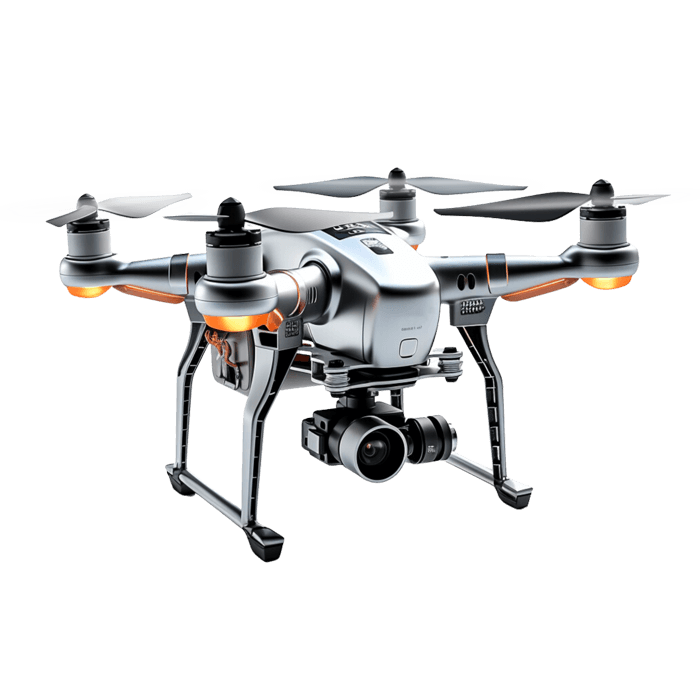
Quadcopters, distinguished by their four-rotor design, are a dynamic class of unmanned aerial vehicles (UAVs) that leverage advanced aerodynamics, electronics, and mechanics.
This unique configuration provides them with superior stability and maneuverability over traditional single-rotor helicopters, making them ideal for a range of applications from aerial photography to precision agriculture and emergency response.
In this comprehensive guide, we will delve into the intricate details of quadcopters, exploring their various types, functionalities, and the principles behind their operation, providing a thorough understanding of how these devices can be optimized for both commercial and recreational purposes.
What Is a Quadcopter?
A quadcopter, also known as a quadrotor, is an unmanned aerial vehicle (UAV) characterized by its four rotors, each equipped with a motor and propeller.
Types of Quadcopters
Quadcopters come in various types, distinguished mainly by their frame shapes and intended uses. The most common types include:
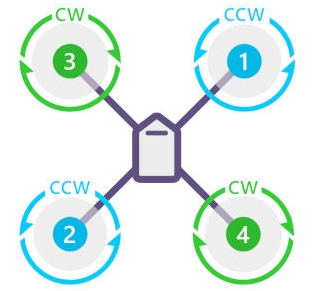
- X Quadcopter: A versatile design used for aerial photography, videography, racing, and acrobatic stunts. Frame variations include true X, square, hybrid X, and stretched X.
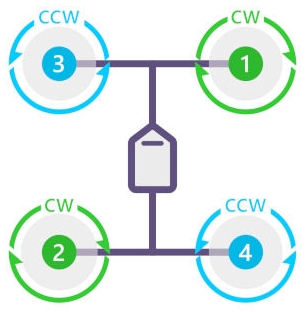
- H Quadcopter: Features an H-shaped frame and is known for its stability.
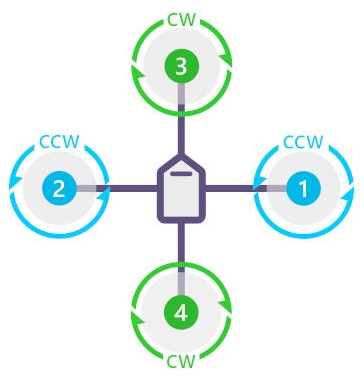
- + Quadcopter: Excels in straight flight paths with aerodynamically efficient propeller positions, often used in acrobatic flying.
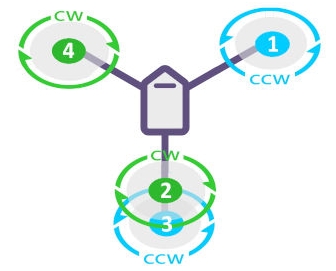
- Y4 Quadcopter: Similar to a tricopter but with two motors mounted coaxially on the rear arm, providing better yaw control and lifting power.
- V-tail or A-Tail Quadcopter: Offers enhanced yaw control through rear motors mounted at an angle, utilizing thrust for turning.
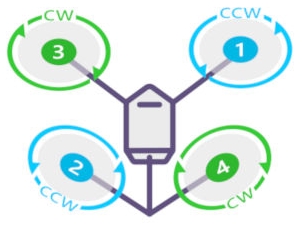
V-tail Quadcopter
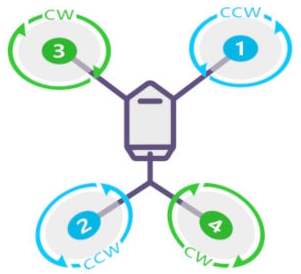
A-Tail Quadcopter
Pros of Quadcopters
- Stable Flight Performance: Quadcopters are known for their ability to hover and perform stable flights, ideal for capturing high-quality images and videos.
- Versatility: They are used in a wide range of applications, from recreational flying to professional tasks like surveying and disaster management.
- Accessibility: The technology has become more accessible and cost-effective, making it easier for hobbyists and professionals alike to utilize quadcopters.
- Maneuverability: Their design allows for agile movements and precise control, which is beneficial in complex or confined spaces.
How Do Quadcopter Drones Fly?
Quadcopters harness Newton’s Third Law of Motion and a complex interplay of components to achieve flight, a fascinating process detailed in the sections below.